The Open-Source AI Toymaker Taking On Big Tech’s Black Boxes
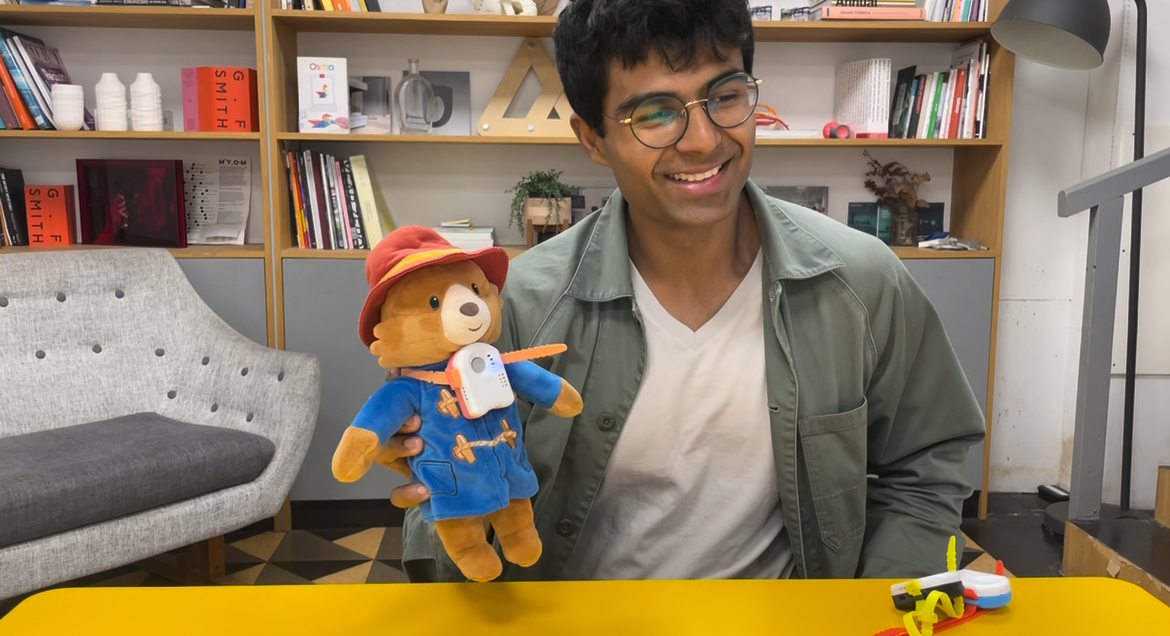
On a workbench at Somerset House, wedged between circuit boards and coffee cups, a small plush toy begins to speak. The voice is uncannily natural, none of the stilted cadence that marks most children’s AI gadgets. This is Elato, and the person who built it isn’t trying to be the next Furby. He’s trying to show us what AI toys have been missing.
Akashdeep Deb is 28, a former Silicon Valley engineer, and increasingly uneasy about the direction AI toys have taken. Over the past year, he’s watched the market flood with “smart” companions powered by opaque AI models; devices that occasionally veer into troubling conversations because nobody outside the company knows exactly how they’re tuned.
“Parents kept telling me they were nervous,” he says over the hum of 3D printers. “A toy shouldn’t require a trust fall.”
So he built an alternative. Not sleeker or cuter, but transparent.
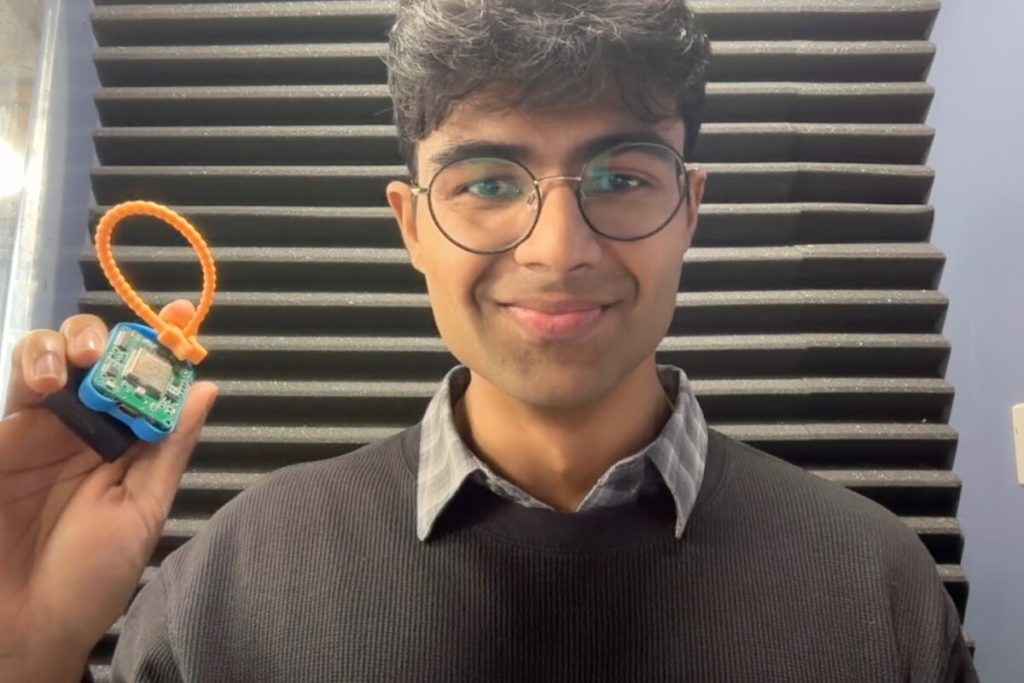
His device Elato is a small AI module that clips onto any stuffed animal and runs entirely open-source code. Every line lives on GitHub, where it’s been starred over 1,800 times by developers who’ve adapted it for therapy robots, local toy companies, and classroom college projects. Earlier this year, OpenAI featured Elato in their Cookbook as their reference for running real-time voice models on Arduino microcontrollers; devices so cheap they power electric toothbrushes.
This isn’t just tinkering. The toy industry has been rushing AI into products without much scrutiny, and the results have occasionally been alarming. Stories have emerged of “smart” companions discussing adult content with children, or harvesting voice data in ways parents never consented to. These systems are black boxes, governed by terms of service nobody reads.
Deb’s approach is the opposite. “If something’s going to talk to your child, you should be able to look under the hood,” he says. “Not just in theory. Actually look.”
He’s spent the past six months at Makerversity, the creative technology workshop inside Somerset House, as part of their Maker with a Mission residency. It’s a peculiar ecosystem—fashion technologists work next to speculative designers, sculptors share tools with roboticists. Deb credits the environment with keeping him grounded. “You can’t build something soulless here,” he says. “There’s too much critique in the air.”
The hardware is deliberately modest: an ESP32-S3 microcontroller that costs about £5, a speaker, a microphone, and some clever firmware that lets it run sophisticated language models locally. No cloud dependency. No always-on listening. No data leaving the device unless a parent explicitly allows it.
I ask whether open-source is realistic for consumer products. Won’t most parents just want something that works out of the box?
“Probably,” he admits. “But right now, ‘works out of the box’ also means ‘trust us completely.’ And I don’t think that’s good enough anymore.”

He’s planning a Kickstarter launch—a small production run to test whether there’s appetite for AI toys that don’t require blind faith. Whether the market has room for such a product is unclear. The toy industry is dominated by companies with deep IP moats and proprietary ecosystems. Amazon, Google, and a dozen startups have already planted their flags.
But Deb isn’t trying to compete on features. He’s competing on values. And in an era when AI is proliferating faster than regulation can keep up, that feels less like a business strategy and more like a necessary intervention.
Before I leave, he shows me a message from a doctor in Birmingham who’d built an Elato device from his instructions. His daughter, who has autism, had been struggling with social interactions. The toy became a practice companion—predictable, patient, and fully customizable to avoid topics that might cause distress. “That’s the thing,” Deb says. “When people can see how something works, they can make it work for them.”
Elato may or may not find its way into toy shops. But in proving that transparent AI toys are technically possible, Deb has made it harder for the industry to claim they’re not. And that might matter more than any single product.
More on ElatoAI can be found at: https://www.elatoai.com