Harry And Meghan Are Back – But Why Does So Much Of The British Media Seem Determined To Hate Them?
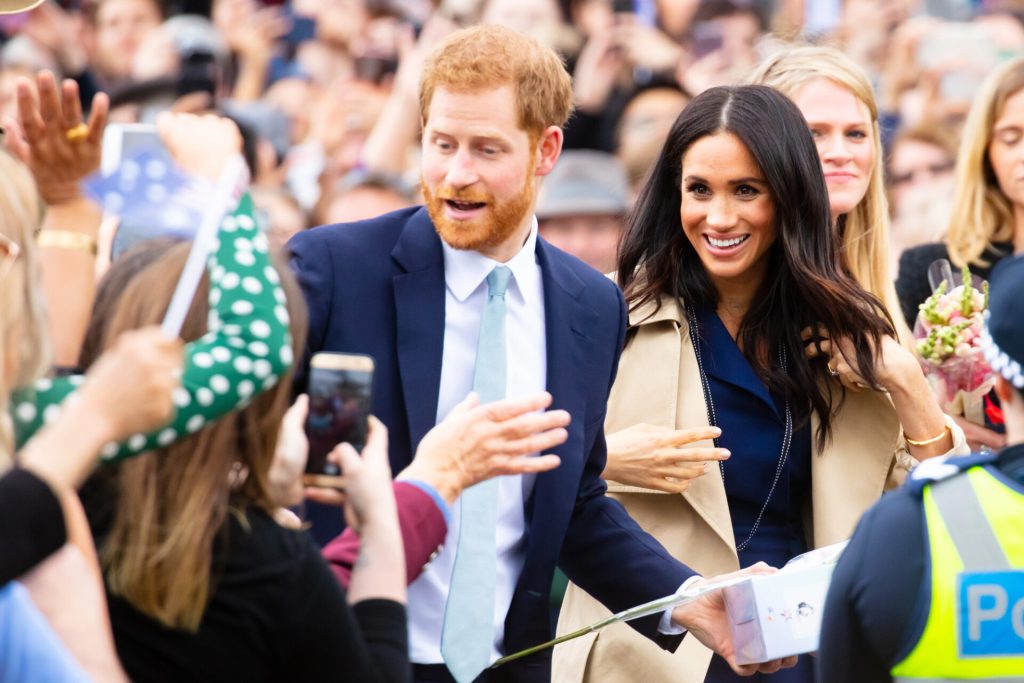
The Duke and Duchess of Sussex are back in Britain, six years after they stepped away from life as working members of the Royal Family and eventually settled in California.
Prince Harry and Meghan have returned with their children, Prince Archie and Princess Lilibet, for what has been described as an extended stay in the UK. Reports suggest the children have been enrolled at school here, making this considerably more significant than one of Harry’s occasional visits home.
Predictably, their return has generated an extraordinary amount of coverage.
Some of it is understandable. Harry is the King’s younger son and remains one of the most recognisable members of the Royal Family. His relationship with his father and, particularly, his brother Prince William has been the subject of intense interest for years.
But reading some of the reaction to the Sussexes’ return raises a rather uncomfortable question.
Why does so much of the British media appear to dislike Harry and Meghan quite so much?
The Sussexes are certainly not beyond criticism
A fair assessment has to acknowledge that Harry and Meghan have sometimes made life considerably harder for themselves.
After leaving royal duties, they repeatedly spoke publicly about an institution from which they were simultaneously trying to distance themselves.
There was the Oprah Winfrey interview, the Netflix documentary series and Harry’s memoir Spare. Private conversations and family disagreements became public knowledge.
Harry in particular cannot reasonably complain that every aspect of his family relationships should remain private while also publishing intimate details about those relationships himself.
There have also been legitimate questions about how the Sussexes have attempted to combine celebrity, commercial ventures and public service.
Their departure from royal life was partly presented as an attempt to escape the relentless scrutiny surrounding them. Yet they subsequently signed major media deals and continued to operate very publicly.
Those contradictions are fair territory for journalists.
And anyone arguing that every negative story about Harry or Meghan is motivated by prejudice does them no favours. Public figures can be criticised. Journalism is supposed to scrutinise powerful and privileged people.
But scrutiny and hostility aren’t necessarily the same thing.
The sheer intensity is difficult to explain
The remarkable thing about Harry and Meghan isn’t that they receive criticism. It is the extraordinary volume and intensity of it.
Six years after they stopped being working royals, newspapers can still generate headlines from Meghan’s clothes, friendships, television projects, social media activity, business ventures and almost anything she says publicly.
Their decision to return has again produced speculation about their motives, finances, relationship with the Royal Family and whether Britain should welcome them.
Even before their arrival, commentary was warning of the possibility of competing royal “courts” and suggesting their presence could create difficulties for Buckingham Palace.
A recent Guardian commentary acknowledged both a sceptical public and hostility towards the couple from significant sections of the press, while arguing that Harry and Meghan themselves could take steps to rebuild trust.
That seems a considerably more sensible position than treating either side as entirely innocent.
Harry and Meghan have made mistakes.
So has the media.
Meghan has faced something particularly unpleasant
There is also an important distinction between criticism of the couple and the treatment Meghan herself has received.
She arrived in Britain as a successful American actress who was divorced, mixed-race and unfamiliar with the peculiar conventions surrounding the British monarchy.
Initially, much of the coverage was enthusiastic.
That honeymoon didn’t last.
Over time, an extraordinarily negative narrative developed around her. Stories about behaviour, staff, family relationships, spending and supposed breaches of royal protocol accumulated until Meghan was no longer simply a duchess who could be criticised. She had become a character in an ongoing national soap opera.
Almost anything could apparently be interpreted negatively.
Confidence became arrogance. Privacy became secrecy. Ambition became social climbing. Speaking publicly became attention-seeking, while remaining silent simply encouraged another round of speculation.
That doesn’t mean every allegation or criticism was unfair. Nor does it mean racism explains every negative Meghan story.
But it would be equally unreasonable to pretend that race, nationality, class and Britain’s complicated relationship with outsiders could never have influenced the tone of any coverage.
The treatment of Meghan should at least make us uncomfortable enough to ask the question.
Harry’s war with the newspapers changed everything
There is another elephant in the room.
Prince Harry hasn’t merely criticised Britain’s tabloid press. He has taken parts of it on directly through the courts.
That has transformed his relationship with sections of the media from the traditionally uneasy relationship between royalty and newspapers into something considerably more confrontational.
The bitterness is now difficult to miss.
Harry’s legal battles have continued to generate headlines, including a recent failed case involving Associated Newspapers that resulted in Harry and other claimants paying £9.5 million towards the publisher’s legal costs.
Those cases deserve to be reported fully and fairly, including when Harry loses.
But they also provide important context when considering the relationship between the Sussexes and Britain’s newspapers.
These are not necessarily detached parties observing one another from a comfortable distance. There is history between them.
Perhaps the public isn’t as obsessed as the headlines suggest
There is another possibility worth considering: perhaps ordinary people simply don’t care as much as newspapers think they do.
A YouGov poll cited following news of the Sussexes’ planned return reportedly found 21% thought they should return to Britain, 33% thought they shouldn’t and a striking 45% answered “don’t know”.
That hardly suggests a nation consumed with fury.
For many people, Harry and Meghan are probably neither heroes nor villains.
They’re simply a wealthy, famous married couple who fell out spectacularly with his family, moved abroad, said things they perhaps later regretted and are now attempting to work out what comes next.
That description is considerably less exciting than the permanent royal civil war portrayed in some quarters.
Their return could actually be a good thing
Perhaps Britain could try something genuinely radical and simply give them a chance.
Harry remains the son of King Charles and the brother of Prince William. Whatever has happened between them, reconciliation would surely be preferable to decades of bitterness.
There are children involved too.
Archie and Lilibet have British family and a remarkable heritage on this side of the Atlantic. Giving them an opportunity to know their grandfather, cousins and extended family seems entirely reasonable.
Harry has also demonstrated an ability to make a genuine difference through causes including veterans and the Invictus Games. Meghan has a substantial international profile and has championed causes involving women and communities.
Neither needs to become a working royal again for those things to have value.
And perhaps returning to Britain without immediately attempting to reclaim a formal royal role could eventually provide the middle ground that proved impossible to achieve in 2020.
Nobody needs to pick a team
One of the strangest consequences of the Sussex saga has been the apparent requirement to join a side.
You must apparently be Team Harry and Meghan or Team William and Catherine.
Real families aren’t that simple.
Harry can have behaved badly towards his brother while also having legitimate grievances.
William can have understandable reasons for being angry while Harry can still deserve an eventual opportunity for reconciliation.
Meghan can have made mistakes while also having endured unpleasant and sometimes excessive media treatment.
King Charles can love his son while disagreeing profoundly with decisions he has made.
All of those things can be true simultaneously.
The return of the Duke and Duchess of Sussex therefore presents an opportunity not merely for the Royal Family but for the British media and public.
We could continue the endless cycle of outrage, anonymous briefings, speculation and character assassination.
Or we could accept something much less dramatic.
Harry and Meghan aren’t saints.
They aren’t villains either.
They’re two imperfect human beings who made an enormous decision six years ago, discovered that life outside the monarchy wasn’t necessarily as straightforward as anticipated, and have now chosen to spend considerably more time in Britain.
Criticise them when criticism is deserved. Question their decisions. Examine their commercial interests. Hold them accountable for what they say.
But perhaps we should also question why a couple who ceased being working royals six years ago can still provoke such extraordinary hostility.
And, occasionally, ask ourselves whether the Sussexes really generate all this drama – or whether an industry that discovered Harry and Meghan sell an awful lot of newspapers, clicks and outrage has become rather reluctant to let the drama end.