FRS 102: What the Changes Mean for the UK Media, Film and Entertainment Industry
Accounting standards are easy to overlook when they appear to be an issue for the finance department rather than the wider creative business. For companies operating in the media, film and entertainment industries, however, changes to financial reporting can have implications that reach far beyond the accounts team.
FRS 102 is a good example of why that matters.
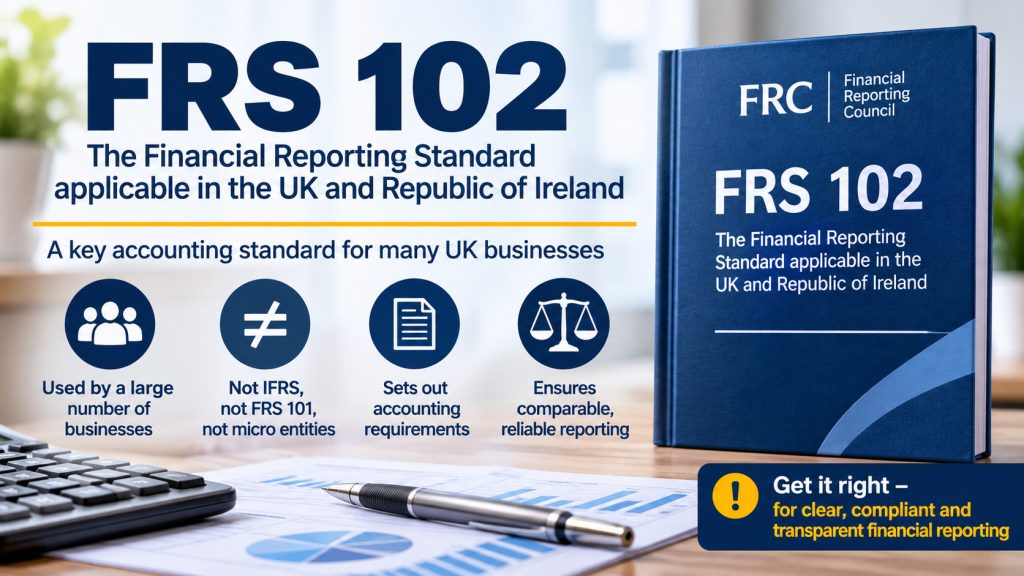
The Financial Reporting Standard applicable in the UK and Republic of Ireland is used by a large number of businesses that do not report under adopted IFRS, FRS 101 or the micro-entity standard FRS 105. Changes to FRS 102 can therefore affect how media companies report revenue, leases, assets and liabilities, as well as financial measures used by lenders, investors and management teams.
This is particularly relevant following the Financial Reporting Council’s 2024 periodic review. Substantial amendments to the standard apply, in most cases, to accounting periods beginning on or after 1 January 2026.
For UK media and entertainment businesses, this is no longer something to leave on the finance department’s future agenda. It is part of the current reporting environment.
What is FRS 102?
FRS 102 is one of the principal accounting standards used for financial reporting in the UK and Republic of Ireland.
It applies to a broad range of entities preparing general-purpose financial statements, including businesses operating across film production, television broadcasting, digital media, music, entertainment and related creative industries.
The standard is based partly on the international IFRS for SMEs framework, although it contains significant changes for the UK and Irish reporting environment.
FRS 102 is reviewed periodically rather than remaining static indefinitely. The most recent major review was completed in March 2024, with most of the resulting amendments taking effect for accounting periods beginning from 1 January 2026.
Two areas deserve particular attention from media and entertainment businesses: lease accounting and revenue recognition.
Lease accounting is one of the biggest changes
For many businesses in the media and entertainment sector, the changes to lease accounting could be among the most significant consequences of the revised FRS 102 requirements.
Under the previous approach, lessees distinguished between operating leases and finance leases. Many operating leases were effectively recognised through rental expenses without putting the associated asset and liability on the balance sheet.
The revised Section 20 changes that position for most lessees.
For many leases, businesses will now recognise a right-of-use asset together with a corresponding lease liability on the balance sheet. Short-term leases and certain leases involving low-value assets can qualify for exemptions.
For media businesses, this could bring a range of existing arrangements into sharper financial focus, including:
- Television and film production studio leases.
- Office and post-production facilities.
- Cinema premises and entertainment venues.
- Broadcasting and transmission equipment.
- Camera, lighting and sound equipment.
- Production vehicles and specialist technical equipment.
This matters beyond the accounting department.
A film production company operating from leased studio facilities, for example, could see both reported assets and liabilities increase. Similarly, a cinema operator with multiple leased premises may experience a noticeable change in its reported financial position.
Rental expenses may also be replaced by depreciation and interest charges for accounting purposes. The underlying cash payments may not have changed, but the way the company’s financial position is presented can look considerably different.
That can influence measures including gearing, interest cover, current ratios and EBITDA. It may also affect how lenders and investors assess the financial health of a production company, broadcaster or entertainment business.
The FRC has specifically highlighted the possibility that companies may need to consider the impact of the revised requirements on loan covenant calculations.
A business operating multiple studios, cinemas or production facilities should therefore be reviewing its lease arrangements well before its year-end accounts are prepared.
Revenue recognition is changing too
Revenue recognition can be particularly complicated in the media and entertainment industry.
A production company might receive funding from a broadcaster, a streaming platform and a distribution partner for the same project. A film distributor could generate income through theatrical releases, digital rentals, streaming licences and international distribution agreements.
A television production business might have contracts covering development, production, delivery and additional rights. Meanwhile, a digital media company could combine advertising, subscriptions, sponsorship and content licensing into its commercial agreements.
The revised Section 23 introduces a single model for recognising revenue from contracts with customers. The approach is based around five steps and focuses on recognising revenue when, or as, control of the promised goods or services passes to the customer.
For businesses with relatively straightforward transactions, the practical effect may be limited.
For companies operating with complex production agreements, licensing arrangements, distribution rights, royalties, variable consideration or revenue spread across different reporting periods, the implications could be much more significant.
For example, a television production company might receive an initial payment when a project is commissioned, further payments at production milestones and a final payment when the finished programme is delivered.
The timing of revenue recognition will depend on the contractual obligations and when those obligations are satisfied. Simply receiving a payment does not necessarily mean that the revenue should be recognised immediately.
Similarly, a film distributor licensing content to an international streaming platform may need to consider the precise nature of the rights being supplied and the terms of the agreement.
This is why reviewing commercial contracts, rather than simply reviewing accounting records, is important.
Finance teams may need information from production, distribution, legal, commercial and sales departments to understand exactly what has been promised, which obligations exist and when they are fulfilled.
What should UK media and entertainment businesses be reviewing?
FRS 102 should not be approached as a last-minute compliance exercise.
For companies operating across film, television, broadcasting, music, publishing and digital entertainment, a sensible review can begin with four practical questions:
What leases does the business currently have?
Look beyond office premises. Studio facilities, cinema locations, production equipment, vehicles, broadcasting infrastructure and other leased assets may also be relevant.
Which customer and commercial contracts contain multiple products, services or stages?
Production agreements, content licensing, distribution contracts, broadcasting arrangements and subscription packages are likely to deserve particular attention when reviewing revenue recognition.
Could the changes affect banking arrangements or financial performance measures?
A loan covenant based on gearing, EBITDA or another accounting measure may behave differently after lease liabilities move onto the balance sheet. This could be particularly relevant for production companies and cinema operators with significant property commitments.
Does the business have the information needed to perform the calculations?
Lease dates, payment schedules, renewal options, production milestones, licensing periods and contractual obligations may currently be scattered across spreadsheets, production management systems, documents and emails.
The earlier these questions are answered, the less likely the year-end reporting process is to become an exercise in reconstructing commercial agreements from incomplete records.
Media businesses may need better lease records
The accounting changes also create a practical data management challenge.
A small independent production company with one office lease may be able to maintain the relevant information without much difficulty.
A larger entertainment group operating several production studios, offices, cinemas and equipment facilities has a very different challenge.
Someone needs to know when each lease started, how long it runs, what payments are due, whether there are options to extend or terminate it and whether the agreement has subsequently been modified.
This information can be particularly important in an industry where production facilities and technical equipment are often leased for specific projects or periods.
A production company might hire specialist filming equipment for an extended production schedule, while a broadcaster could have long-term commitments relating to technical facilities and infrastructure.
These arrangements need to be considered carefully to establish whether they fall within the revised lease accounting requirements.
Businesses may therefore want to review how they manage lease information, whether through better internal controls, structured spreadsheets or dedicated lease accounting systems.
The important point is not that every media company suddenly needs new software. It is that its accounting records must be supported by reliable underlying information.
The numbers may change without the business changing
One of the more interesting consequences of the revised rules is that a company’s reported financial metrics can change even when its commercial operations remain largely the same.
The same production studio may be operating.
The same cinema locations may be open.
The same cameras, lighting equipment and technical facilities may be in use.
The same monthly lease payments may be leaving the bank account.
Yet the balance sheet and profit and loss presentation can look different because the accounting model has changed.
That distinction matters when discussing financial results with lenders, investors, shareholders and management teams.
An increase in reported liabilities does not necessarily mean that a media company has suddenly taken on additional commercial borrowing. It may simply reflect existing lease arrangements that are now presented differently in the financial statements.
For production companies, broadcasters and entertainment groups, this could be particularly important when comparing financial performance across reporting periods.
The FRC notes that the revised lease model can affect measures such as EBITDA, gearing and interest cover.
Businesses may therefore need to explain year-on-year movements carefully, rather than allowing lenders or investors to assume that every change reflects underlying trading performance.
Smaller production companies should not assume the changes are irrelevant
FRS 102 is sometimes associated with larger businesses, but smaller entities using the standard also need to pay attention.
The UK creative industries include thousands of smaller organisations, from independent film production companies and post-production studios to specialist broadcasting suppliers, talent agencies and entertainment businesses.
Many operate using leased offices, production equipment, vehicles and technical facilities.
The current FRS 102 framework also contains provisions specifically relevant to UK small entities, including amended related-party disclosure requirements applying for accounting periods beginning on or after 1 January 2026.
The lease changes can therefore matter to a relatively modest production business just as they can to a much larger entertainment group.
Size alone is not a reliable guide to whether the amendments are important.
The better question is what transactions, contracts and lease arrangements the company actually has.
Preparation is more useful than panic
There is no need for media and entertainment businesses to treat FRS 102 as an accounting emergency.
There is, however, a strong argument for understanding the impact before the financial statements are due.
The Financial Reporting Council has published updated factsheets covering areas including leases, revenue, cash flow statements, financial instruments and the initial application of the 2024 amendments.
These provide a useful starting point for finance teams, production accountants and professional advisers working through the changes.
Businesses should also speak to their accountant or auditor about how the revised standard applies to their particular circumstances. The accounting treatment of an agreement depends on its actual terms, not simply what the contract happens to be called.
For directors and senior management teams across the creative industries, the broader lesson is straightforward.
FRS 102 influences how a media or entertainment business presents its financial position to the outside world. Changes to leases, revenue and other areas can affect reported liabilities, profitability measures and the financial information used by lenders and investors.
That makes it more than a technical accounting update.
For many UK businesses operating across film, television, broadcasting and entertainment, 2026 is the year when the revised requirements move from something to prepare for into something that needs to be applied.
Understanding the changes now gives management more time to organise contracts, improve financial records, speak to lenders where necessary and avoid unpleasant surprises when the financial statements are prepared.